
Can You Mix Fresh Food and Kibble in the Same Bowl?
Many pet parents in Hong Kong love the idea of giving their furkids the wholesome goodness of fresh food, while still keeping the convenience and crunch of kibble. One of the most common questions we receive is:
It’s completely natural to have this concern! There are plenty of myths floating around online suggesting that fresh food digests faster, so it should never touch dry kibble. However, according to modern veterinary science and canine digestive physiology, there is no evidence to suggest that mixing these foods causes unnatural fermentation, bloat, or digestive distress.
- Your dog’s stomach works like a blender rather than a queue—everything that enters is gently churned and broken down together into chyme.
- Digestive upsets during a diet switch are almost always caused by transitioning too quickly or sudden changes in fat content, not by mixing the foods themselves.
- For the vast majority of healthy dogs, a 50/50 mix of kibble and fresh food is a practical, nutritious, and low-risk way to start enjoying fresh meals.
Why Do People Worry About Mixing Fresh Food and Kibble?

The reasoning behind the worry usually sounds something like this:
Fresh food has higher moisture, so it must digest very quickly.
Dry kibble has very little moisture, so it takes much longer to break down.
If eaten together, the fresh food will sit and wait for the kibble, leading to fermentation, gas, and tummy aches.
While this might sound logical at first glance, a dog’s digestive system does not have separate lanes, nor does the stomach process food on a "first-in, first-out" assembly line.
In reality, as soon as food reaches the stomach, it combines into a single mixture. Through mechanical contractions and chemical gastric juices, the stomach breaks everything down into a uniform, semi-liquid mixture called chyme before releasing it into the intestines.
In short: Your dog's stomach is designed like a blender, not an orderly queue!
Fresh Food and Kibble Have Different Properties—But "Different" Doesn't Mean Incompatible

It’s true that fresh food and kibble have very different nutritional and structural profiles:
| Nutritional & Processing Feature | Dry Kibble | Fresh Food |
|---|---|---|
| Moisture Content | ~6–10% | ~65–80% |
| Processing Method | High-temperature extrusion & baking | Gently cooked / sous-vide |
| Typical Starch Level | Usually higher | Usually lower (recipe-dependent) |
Because fresh food is rich in moisture, many pet parents intuitively assume it must always digest much faster. But in reality, digestive speed is influenced by a whole host of factors:
- Total fat content
- Portion size per meal
- Type and amount of dietary fiber
- Caloric density
- Your dog’s individual gut sensitivity
- Overall dietary balance
A fresh meal rich in healthy fats can actually stay in the stomach longer than a low-fat kibble meal. Digestion simply isn't black and white:
What Really Causes Tummy Upsets During Mixed Feeding?
If your pup experiences soft stools, extra gas, or temporary tummy sensitivity when starting mixed meals, the culprit is **almost never the mixing itself**. More common reasons include:
Transitioning Too Quickly
Your dog’s gut microbiome needs a little time to adapt. Going from 100% dry food to a large portion of fresh food overnight can cause temporary loose stools—simply because of the sudden change in pace, not because the two foods were served together.
An Increase in Healthy Fats
Fresh whole foods often contain richer, higher-quality natural fats than processed kibble. While healthy fats are vital for shiny coats and sustained energy, a sudden leap in fat intake can temporarily soften stools while the gut adjusts.
New Fiber & Whole Ingredients
Fresh food introduces real vegetables, fresh meats, and wholesome dietary fibers that work differently in the digestive tract. During the first few days of adjustment, these new ingredients can naturally change stool consistency.
Individual Sensitivities
While some adventurous dogs can switch diets effortlessly, others require a slower, gentler touch—especially pups who have:
- Highly sensitive stomachs
- A history of gastrointestinal flare-ups
- Pancreatic health considerations
- Known specific food allergies
So... Can I Mix 50% Fresh Food and 50% Kibble in the Same Bowl?
For the **vast majority of healthy dogs**, the answer is a warm and resounding: **Yes, absolutely!**
Serving a mixed bowl is a wonderful and practical way to:
- ✔ Gently introduce the vital nutrients and hydration of fresh whole food
- ✔ Enhance aroma and palatability, making mealtimes much more exciting
- ✔ Help picky eaters or kibble-only dogs transition effortlessly
- ✔ Provide the benefits of fresh food while fitting comfortably within your family’s routine and budget
The real secret isn’t *whether* you mix, but *how gently and thoughtfully you begin*.

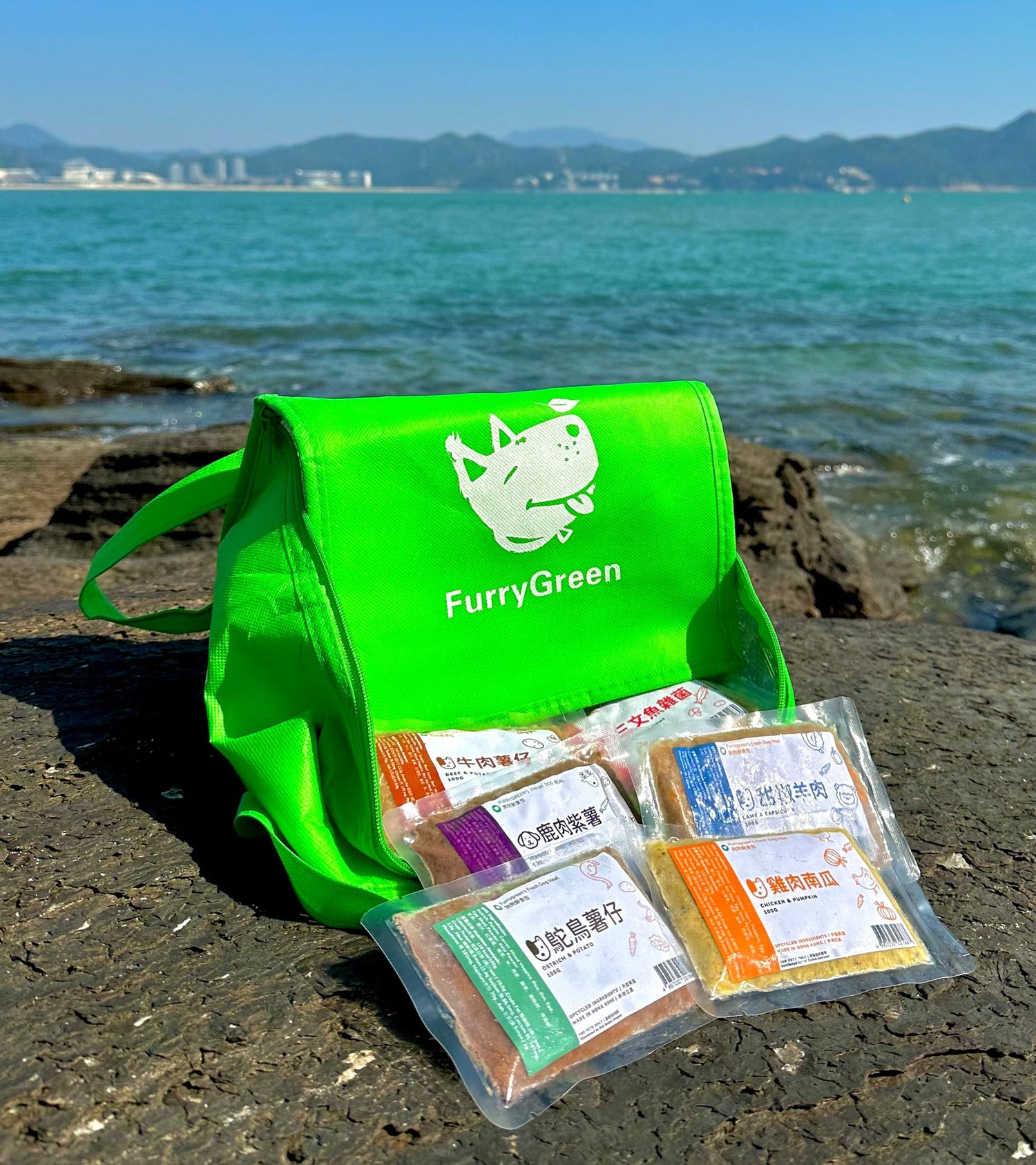
Ready to treat your pup to fresh, wholesome nutrition? Discover Furry Green’s gently cooked recipes, proudly made with love right here in Hong Kong.
Explore Furry Green Dog FoodFrequently Asked Questions
Does mixing fresh food and kibble cause bloat in dogs?
Should I feed fresh food and kibble in separate meals instead?
How long does it take for a dog to adapt to mixed feeding?
Why did my dog get soft stools after adding fresh food?
Can Furry Green's gently cooked fresh meals be mixed with kibble?
References
- Hall EJ, German AJ. Physiology of the Gastrointestinal Tract. In: Canine and Feline Gastroenterology. St. Louis, MO: Elsevier Saunders; 2013.
- Washabau RJ, Day MJ (eds). Canine and Feline Gastroenterology. Elsevier; 2013.
- Hand MS, Thatcher CD, Remillard RL, Roudebush P, Novotny BJ. Small Animal Clinical Nutrition. 5th ed. Topeka, KS: Mark Morris Institute; 2010.
- National Research Council (NRC). Nutrient Requirements of Dogs and Cats. Washington, DC: National Academies Press; 2006. 可參考: https://nap.nationalacademies.org/catalog/10668/nutrient-requirements-of-dogs-and-cats
- Meyer H, Zentek J. Nutrition of the Dog and Cat. Stuttgart, Germany: Schlütersche; 2010.
- Steiner JM. "Small Animal Gastroenterology." In: Ettinger SJ, Feldman EC, Côté E (eds). Textbook of Veterinary Internal Medicine. Elsevier.
- Suchodolski JS. "Intestinal Microbiota of Dogs and Cats: A Bigger World Than We Thought." Veterinary Clinics of North America: Small Animal Practice. 2011;41(2):261–272. doi:10.1016/j.cvsm.2010.12.006
- eClinPath. Digestive System and Gastrointestinal Physiology Resources. Cornell University College of Veterinary Medicine. 可參考: https://eclinpath.com
- Laflamme DP, Abood SK, Fascetti AJ, et al. Pet feeding practices of dog and cat owners in the United States and Australia. Journal of the American Veterinary Medical Association. 2008;232(5):687–694. doi:10.2460/javma.232.5.687
- Zentek J, Meyer H. Influence of diet composition on gastrointestinal transit and digestion in dogs. In: Nutrition of the Dog and Cat. Schlütersche Publishers.