
Xylitol Isn’t Always Called Xylitol: What Every Dog Parent in Hong Kong Needs to Know
Quick Answer:
Yes, Birch Sugar is simply another name for Xylitol, a sweetener that is extremely toxic to dogs. Even small amounts found in sugar-free gum, peanut butter, or dental products can cause a rapid, life-threatening drop in blood sugar (hypoglycemia) and liver failure. If your dog ingests any product containing Xylitol or Birch Sugar, seek immediate veterinary care.
Key Takeaways:
- It's Not Just "Xylitol": Manufacturers are increasingly using terms like "Birch Sugar," "Wood Sugar," and "Kabocha Extract" on ingredient labels.
- Tiny Amounts are Fatal: A single stick of gum or a dime-sized blob of toothpaste can be deadly to a 10kg dog.
- Time is Critical: Symptoms like vomiting and weakness can appear within 30 minutes; immediate treatment significantly improves survival rates.
Google AI Overview:
This article explains the dangers of Xylitol (also known as Birch Sugar) for dogs, detailing why it causes hypoglycemia and liver damage. It provides a list of common household products containing this toxin, identifies alternative names used on labels, and offers specific advice for Hong Kong pet owners on prevention and emergency response.
I recently spoke with a pet owner who is incredibly health-conscious. She keeps a "sugar-free" household, stocking up on keto snacks and natural sweeteners. She was shocked when I told her that the "all-natural birch sugar" in her pantry was actually one of the most lethal substances for her Frenchie.
She's not alone. As we strive for healthier lifestyles in Hong Kong, we're bringing more sugar substitutes into our small apartments. But there is one ingredient that poses a silent, deadly threat to our dogs: Xylitol.

The "Insulin Factory" Problem: Why It's Toxic
You might be wondering, "If I can eat it, why can't my dog?"
Here's the science. In humans, Xylitol doesn't stimulate insulin release. That's why it's great for diabetics. But a dog's pancreas reacts differently. When a dog eats Xylitol, their body mistakes it for a massive amount of sugar.
The pancreas responds by releasing a flood of insulin. This causes a rapid, profound drop in blood sugar (hypoglycemia). This can happen in as little as 30 minutes. In higher doses, Xylitol causes necrosis (death) of liver cells, leading to acute liver failure.
The Great Disguise: Decoding the Labels
The biggest danger right now isn't just the ingredient itself—it's the rebranding. Marketing teams are moving away from the chemical-sounding "Xylitol" toward natural-sounding names.
If you are scanning labels for "Xylitol" alone, you might miss the threat.
| Common Name on Label | What It Actually Is | Risk Level |
|---|---|---|
| Xylitol | Sugar alcohol sweetener | High/Deadly |
| Birch Sugar / Birch Sap | Marketing name for Xylitol | High/Deadly |
| Wood Sugar | Another source-based name | High/Deadly |
| Kabocha Extract | Sweetener derived from squash | High/Deadly |
| E967 | Food additive code | High/Deadly |
| Sugar Alcohols | Umbrella term (may include Xylitol) | Caution Required |
Note: "Kabocha Extract" is a concentrated sweetener. This is different from the fresh pumpkin or kabocha squash you might steam for your dog, which is safe and healthy.
Hidden Hazards in Hong Kong Apartments
In our compact living spaces, our dogs are never far from our personal items. A handbag left on the floor or a counter-surfing attempt can turn tragic in seconds.
Common culprits include:
- Sugar-Free Gum & Mints: The #1 source of poisoning.
- Peanut Butter: Many "health" brands now use Xylitol.
- Dental Products: Toothpaste and mouthwash.
- Supplements: Chewable vitamins, melatonin gummies, and electrolyte powders.
This is where nutrition becomes tricky. We all love stuffing a Kong with peanut butter to keep our pups busy during a Zoom call. But if you grab the wrong jar, the consequences are severe.

Worried About Hidden Ingredients?
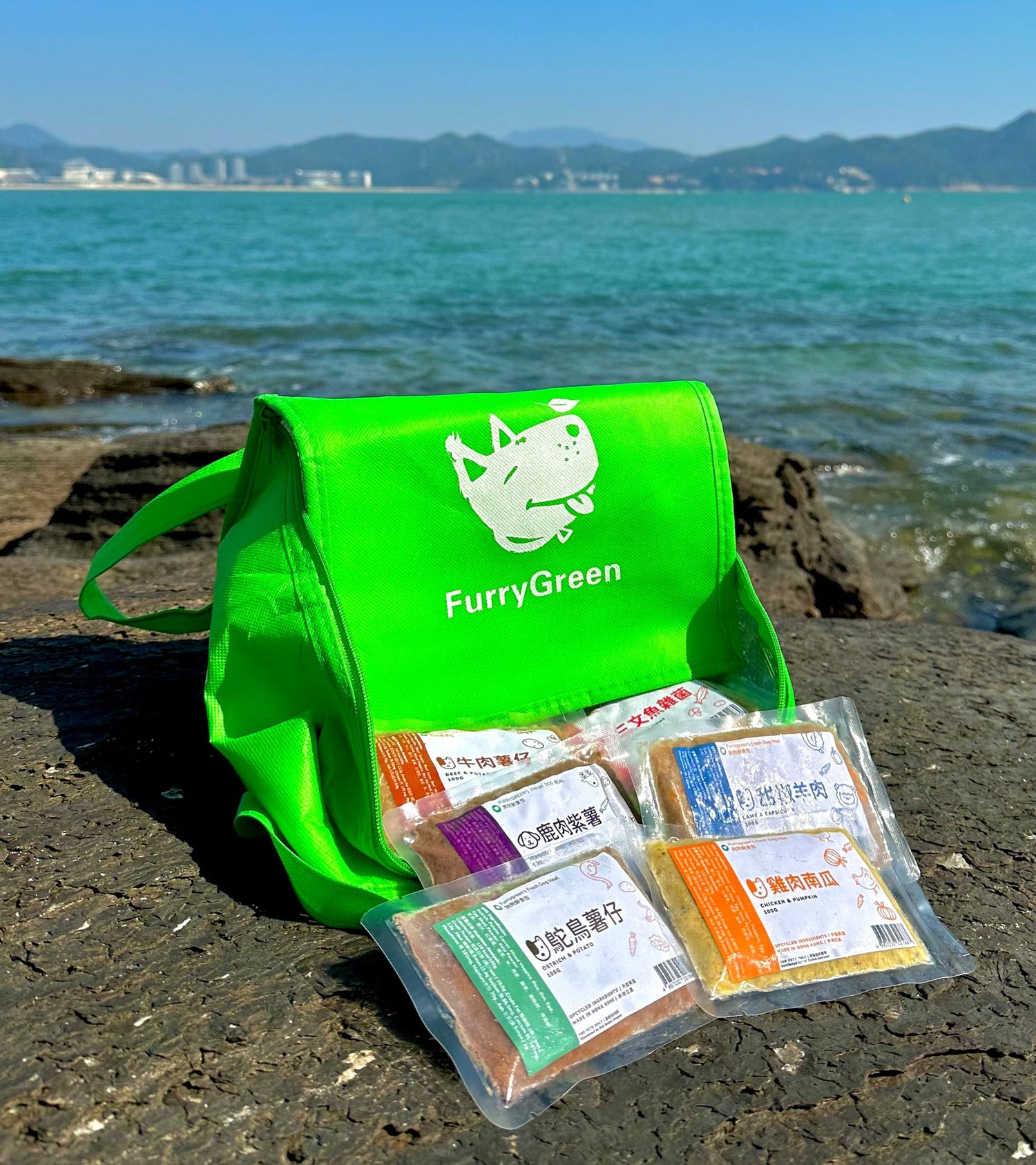
At Furry Green, we understand that ingredient anxiety is real. When we formulate our gently cooked meals, we use whole, human-grade ingredients without hidden additives or sweeteners. You never have to worry about decoding a chemistry set on our labels—if it says pumpkin, it's pumpkin, not a toxic extract.
Explore Our MenuSymptoms and Immediate Action
Time is your enemy with Xylitol. Symptoms can start within 15-30 minutes, or be delayed up to 12 hours.
Watch for:
- Vomiting (usually the first sign)
- Weakness or lethargy
- "Drunk" walking (ataxia) or lack of coordination
- Tremors or seizures
- Collapse
What to do:
If you suspect your dog ate Xylitol, do not wait for symptoms.
- Check the packaging: Does it say Xylitol, Birch Sugar, or E967?
- Go to the Vet: Head to your nearest clinic immediately. If it's late, head to a 24-hour emergency vet (like the ones in Happy Valley or Mong Kok).
- Do NOT induce vomiting: Unless instructed by a vet. If your dog is already hypoglycemic, vomiting can make them worse.
Prevention is the Best Medicine
My colleague's dog once chewed through a backpack to get to a pack of gum. Luckily, they caught him before he swallowed it, but it was a terrifying wake-up call.

To keep your home safe:
- Hang it up: Keep purses and backpacks off the floor.
- Switch your toothpaste: Ensure your dog can't reach your bathroom counter, or switch to a xylitol-free brand if you have a counter-surfer.
- Read every label: Especially on imported "diet" or "keto" foods from the US or Japan.
Feeding your dog shouldn't be a guessing game. By sticking to fresh, transparent nutrition, you eliminate the risk of hidden toxins. Furry Green meals are designed to provide complete, balanced nutrition using ingredients you recognize from your own kitchen—just safer. We take the guesswork out of mealtime so you can focus on the belly rubs.
Frequently Asked Questions
Is Birch Sugar the same thing as Xylitol?
Yes. Birch sugar is simply Xylitol extracted from birch trees. It is chemically identical and just as toxic to dogs.
How much Xylitol is toxic to a dog?
It takes very little. For a small dog (like a Poodle or Shiba Inu), just 1-2 pieces of sugar-free gum can cause hypoglycemia. A slightly larger amount can cause liver failure.
Can I give my dog human peanut butter?
Only if you check the label first. Most standard brands (like Skippy or Jif) are safe, but "natural," "low sugar," or "high protein" nut butters often contain Xylitol. Always look for "Xylitol" or "Birch Sugar" on the ingredient list.
Is Xylitol toxic to cats?
Interestingly, no. According to the Merck Veterinary Manual, Xylitol does not cause serious problems in cats. However, it's still best to keep them away from it.
References
- VCA Animal Hospitals. Xylitol Toxicity in Dogs
https://vcahospitals.com/know-your-pet/xylitol-toxicity-in-dogs - ASPCA. Updated Safety Warning on Xylitol
https://www.aspca.org/news/updated-safety-warning-xylitol-how-protect-your-pets - Merck Veterinary Manual. Xylitol Toxicosis in Dogs
https://www.merckvetmanual.com/toxicology/food-hazards/xylitol-toxicosis-in-dogs - Cornell University Riney Canine Health Center. Xylitol Toxicities
https://www.vet.cornell.edu/xylitol-toxicities - Preventive Vet. Xylitol Products Toxic to Dogs
https://www.preventivevet.com/xylitol-products-toxic-for-dogs - Colorado State University Veterinary Teaching Hospital. Birch Sugar = Xylitol
https://vetmedbiosci.colostate.edu/birch-sugar-is-the-same-thing-as-xylitol
Disclaimer: This content is for educational purposes only and does not replace veterinary advice. Always consult a veterinarian when making dietary changes for your pet.