
Can Dogs Eat Canned Food Made for Humans?
Quick Answer: Most canned foods made for humans are unsafe for dogs — high sodium, fat, and toxic ingredients like onion and garlic make them genuinely risky. Occasional plain, low-sodium options are tolerable in tiny amounts, but should never replace a complete and balanced dog diet.
Key Takeaways
- Sodium in a single serving of canned soup often exceeds a dog's entire daily limit, risking hypernatremia.
- Onion and garlic — in any form, including powder and extract — are toxic to dogs and appear in most human canned foods.
- The only canned human foods worth considering are plain, no-salt-added options in water — and only as an occasional treat.
A colleague's helper was feeding their Shiba Inu canned tomato soup because "it's just vegetables." The label showed garlic extract, cream, and 820mg sodium per serving — more than eight times what a 10kg dog needs daily. That's a vet visit waiting to happen.
So let's settle this properly.
Why Human Canned Food Is Risky for Dogs

The problem isn't usually one ingredient. It's the combination.
🧂 High Sodium
Most canned foods contain 400–900mg sodium per serving. A 10kg dog needs roughly 100mg daily. The excess causes hypernatremia — symptoms range from vomiting and lethargy to tremors and seizures in severe cases. Dogs with heart or kidney disease are especially vulnerable.
🥓 High Fat Content
Canned meats and fish packed in oil are calorie-dense and often high in saturated fat. For dogs prone to pancreatitis — Miniature Schnauzers and Cocker Spaniels lead that list — a single high-fat meal can trigger a flare: vomiting, abdominal pain, complete loss of appetite.
☠️ Toxic Ingredients
Onion and garlic (fresh, dried, powdered, or as extract) damage red blood cells, causing hemolytic anemia. They appear in most soups, stews, sauces, and bouillons. No safe threshold has been established for dogs — trace amounts consumed regularly accumulate over time. Other ingredients to flag: xylitol in sugar-free products, nutmeg in some canned desserts, and grape extract in certain fruit preserves.
The Quiet Risk: Nutritional Imbalance
Poisoning is the urgent risk. Nutritional imbalance is the slow one — and just as serious.
Human canned food isn't formulated for dogs. Regular feeding creates gaps in amino acid profiles, calcium-phosphorus balance, and fat-soluble vitamins. After 4–6 months, those gaps show up as dull coat, unexplained weight changes, or lowered immunity.
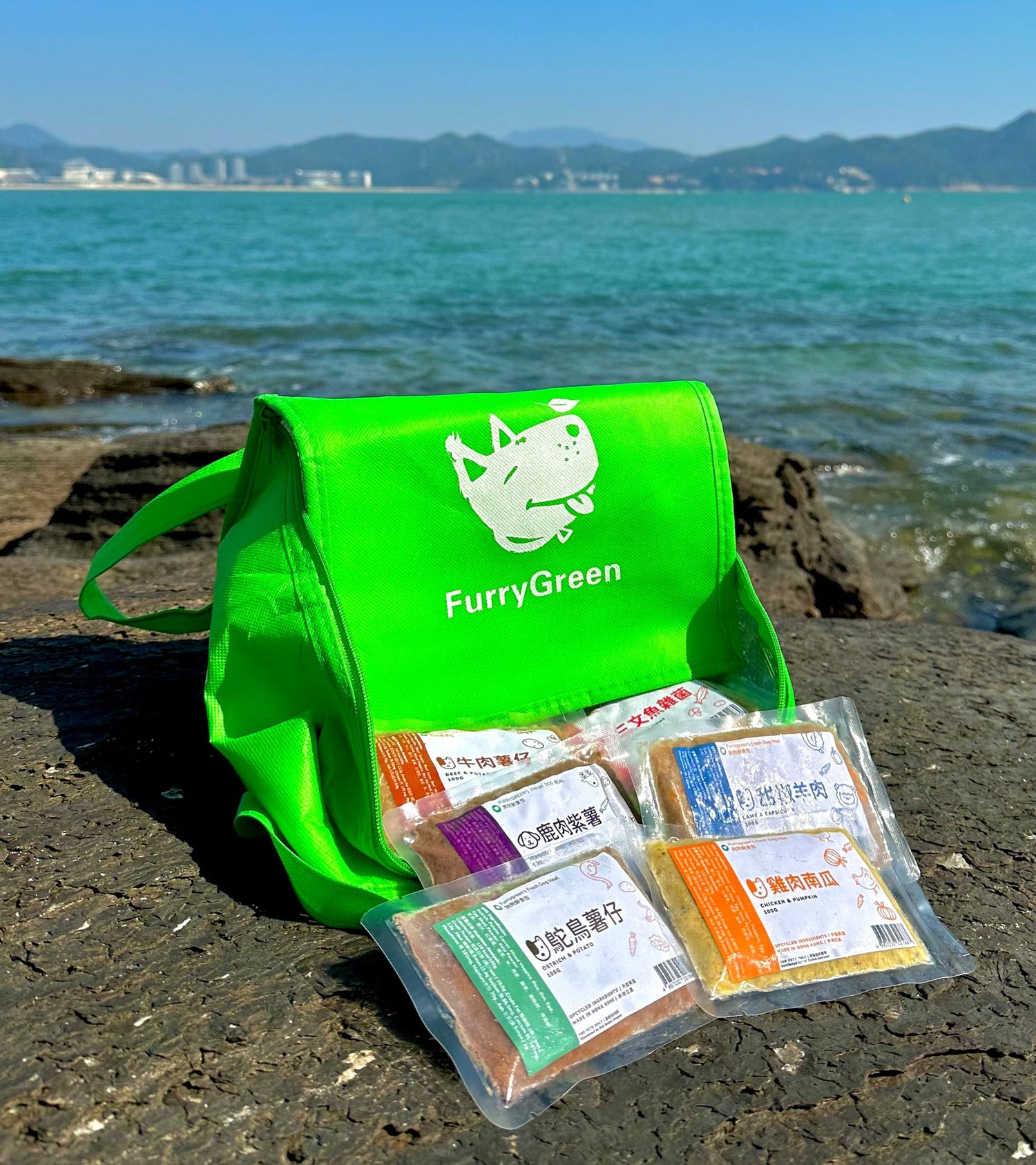
This is where a nutritionally complete baseline matters. Furry Green's gently-cooked meals are formulated to AAFCO standards — every serving meets your dog's full nutrient requirements without guesswork. If you're supplementing with any human food, that foundation is what keeps the overall diet stable.
Check out Our Dog Food Selection →Which Human Canned Foods Are Safest for Dogs?

| Canned Food | Risk Level | Notes |
|---|---|---|
| Soups & stews | ❌ High | Salt, onion/garlic, seasonings |
| Corned beef / Spam | ❌ High | Very high sodium, preservatives |
| Tuna in brine or oil | ❌ High | Excess salt, potential mercury |
| Sardines in water (no salt) | ✅ Lower | Occasional treat only |
| Plain chicken in water (no salt) | ✅ Lower | Check every ingredient |
| Canned vegetables with sauce | ⚠️ Moderate | Often hidden salt or garlic |
If you do offer canned food, keep it to less than 10% of daily calories.
Types of Canned Foods and Their Risks
❌ Canned Soups and Stews
- Very high in sodium
- Often contain onion, garlic, and seasoning
❌ Canned Meats (e.g., corned beef, processed meats)
- High in salt and fat
- May contain preservatives
⚠️ Canned Fish (e.g., tuna, salmon, mackerel)
- Often high in salt or oil
- Tuna may contain mercury
⚠️ Canned Vegetables
- May be safer, but often contain added salt
- Some vegetables are not suitable for dogs depending on preparation
❌ Canned Foods with Sauces
- Frequently contain salt, sugar, fat, and seasonings
- Higher risk of gastrointestinal upset
Are Any Canned Foods Safe for Dogs?
Some canned foods can be given occasionally and in small amounts, if they meet the following criteria:
- ✓ No added salt (low-sodium or sodium-free)
- ✓ No onion, garlic, or harmful seasonings
- ✓ Packed in water, not oil
- ✓ Plain and minimally processed
Examples (in moderation):
- Plain canned chicken in water (no salt)
- Low-sodium canned vegetables (dog-safe types only)
- Sardines or salmon in water (no salt added)
How Much Is Safe?
If you choose to give canned food:
- Treat it as an occasional supplement, not a meal replacement
- Keep it to less than 10% of daily caloric intake
General guideline:
What to Do If Your Dog Already Ate Some
If the amount was small, no onion or garlic was present, and your dog shows no symptoms.
Vomiting, diarrhoea, pale gums, excessive thirst, or unusual lethargy.
If the product listed onion, garlic, or xylitol in any form — or if any symptoms appear. Bring the packaging. The ingredient list and sodium content help your vet assess risk fast.
Contact a veterinarian if:
- A large amount was consumed
- The product contained onion, garlic, or high salt
- Your dog shows symptoms such as:
- Vomiting or diarrhoea
- Lethargy
- Tremors
- Pale gums (possible anaemia)
Be ready to provide:
Frequently Asked Questions
Can dogs eat canned tuna occasionally?
Plain tuna in water — no salt added — is tolerable in small amounts. A teaspoon for small dogs, a tablespoon for medium breeds. Tuna in brine or oil is too salty. Don't make it a habit; mercury accumulates with frequent tuna feeding, and the risk increases over weeks and months of regular use.
What canned foods should dogs never eat?
Anything containing onion, garlic (including powder or extract), xylitol, heavy seasoning, or high sodium. Soups, stews, corned beef, Spam, and most canned sauces fall firmly into this category. The shorter and plainer the ingredient list, the lower the risk.
My dog ate a spoonful of canned soup. Should I panic?
Not immediately — but check the label. If it lists garlic or onion in any form, call your vet. If the amount was small and no toxic ingredients are present, monitor over 24 hours for vomiting, diarrhoea, or lethargy. One-time exposure to plain canned soup rarely causes lasting harm.
Is low-sodium human canned food safe for dogs?
Safer — not safe. "Low-sodium" on a human product often means 140–200mg per serving, which still exceeds a small dog's daily recommended limit. Only consider products explicitly labelled "no salt added," and verify the full ingredient list before offering any.
Conclusion
Canned food made for humans is generally not appropriate as a regular food for dogs.
- Many products contain excess salt, fat, and harmful ingredients
- Occasional small amounts of plain, low-sodium options may be acceptable
- A complete and balanced dog diet remains the safest and healthiest choice
References
- Merck Veterinary Manual – Nutrition: Small Animals https://www.merckvetmanual.com/management-and-nutrition/nutrition-small-animals
- Merck Veterinary Manual – Salt Toxicity in Animals https://www.merckvetmanual.com/toxicology/salt-toxicity/salt-toxicity-in-animals
- National Research Council (NRC). Nutrient Requirements of Dogs and Cats https://nap.nationalacademies.org/catalog/10668/nutrient-requirements-of-dogs-and-cats
- Cornell University College of Veterinary Medicine – eClinPath https://eclinpath.com/