
Helping Your Cat Stay Cool During Hong Kong's Hot & Humid Summer
Quick Answer
Hong Kong summers regularly reach 30–35°C with humidity above 80%, which can increase the risk of heat stress in cats. To keep your cat comfortable:
- Keep indoor temperatures around 26–28°C
- Provide multiple water sources
- Feed moisture-rich wet food
- Use cooling mats and shaded resting areas
- Reduce indoor humidity
- Watch for signs of heatstroke such as panting, drooling, and lethargy
Key Takeaways
- Cats can't sweat through their skin — in a small apartment with poor airflow, heat builds fast
- Moisture-rich food is one of the simplest ways to support hydration daily
- Heatstroke can happen indoors; panting, drooling, and collapse are emergencies

Why Hong Kong Summers Are Tough on Cats
Temperature isn't the only problem. Humidity above 80% makes it harder for the body to cool itself — cats may experience heat stress even when the thermometer looks manageable.
Cats regulate temperature mainly through grooming, limited sweating from paw pads, and — when severely overheated — panting. In a 500 sq ft flat with afternoon sun hammering west-facing windows, the options for natural cooling shrink fast.
Most cats instinctively seek cooler spots. Your job is to make sure those spots exist.
Which Cats Are Most at Risk?
Most local mixed-breed cats ("tong cats") cope reasonably well when given cooling, water, and shade. But some need extra attention.
Higher risk:
- Flat-faced breeds — Persians, Exotic Shorthairs
- Long-haired breeds — Maine Coons, Ragdolls
- Senior cats, kittens, overweight cats
- Cats with heart or respiratory conditions
Generally more heat-tolerant (though not immune):
Siamese, Burmese, Abyssinian — lean bodies, short coats.
Keeping Your Home Cool Without Running the AC at Full Blast
Air conditioning is the most effective tool. Set it to 26–28°C — you don't need to freeze the apartment. Cats actually prefer warmer temperatures than most humans.
Reduce Heat Entering the Flat
- Close curtains between 11am–4pm
- Blackout curtains on west-facing windows make a measurable difference
- Keep windows closed when outdoor air is hotter than indoor air
Create a "cool zone": If running AC throughout isn't practical, choose one room — keep water, food, litter, and a resting spot there. This keeps your cat comfortable while cutting electricity use.
According to CLP Power, cleaning your AC filter regularly saves around 30% energy — worth doing before the humid season hits. A ceiling fan running alongside moderate AC helps circulate cool air without dropping the thermostat further.
Encourage Better Hydration

Cats naturally have a low thirst drive, making hydration especially important during summer.
Easy Ways to Increase Water Intake
- Place 2–3 water bowls in different rooms
- Refresh water twice daily — or add ice cubes on particularly hot days
- A cat water fountain encourages drinking; many cats prefer moving water
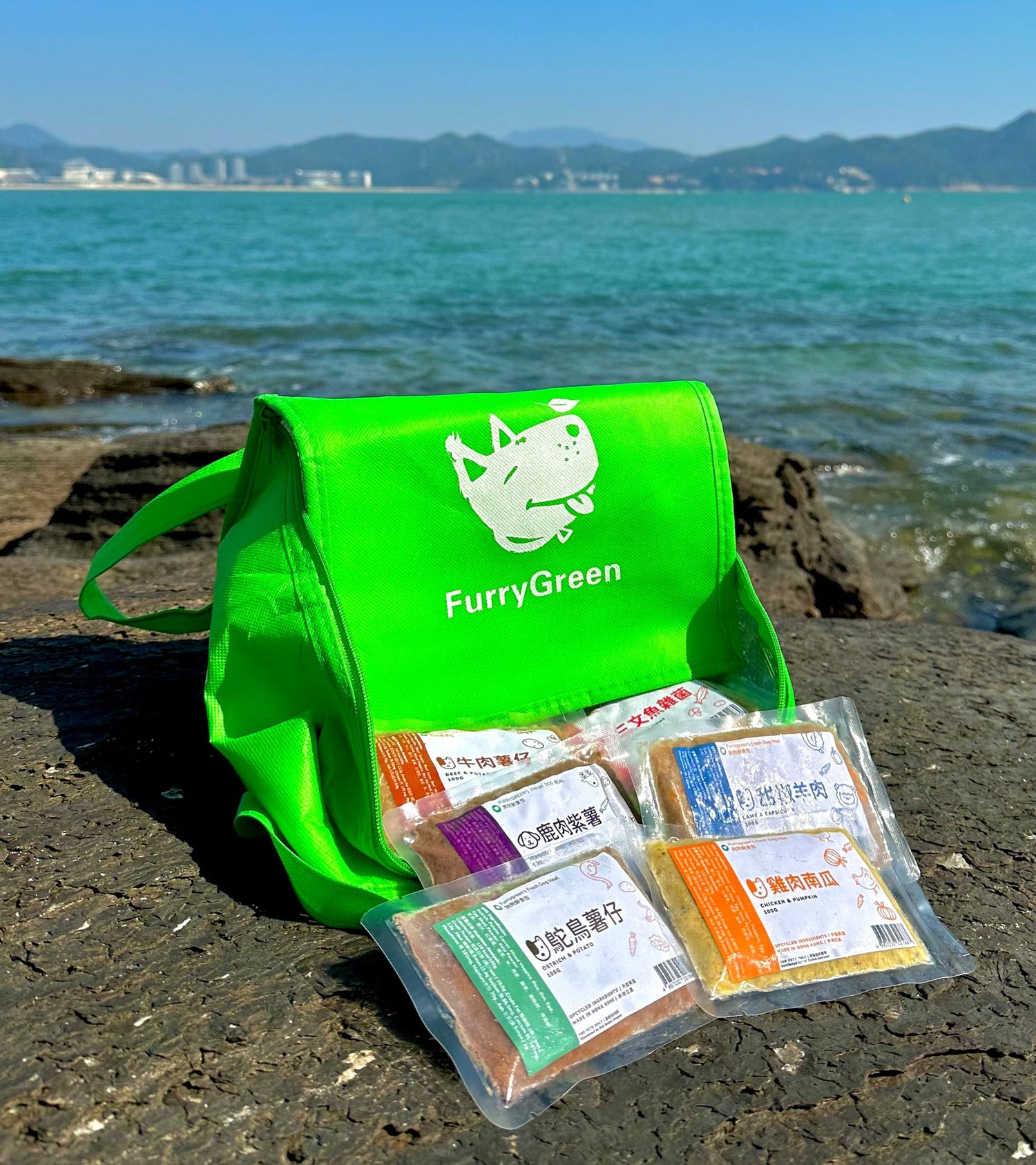
- Diet matters here too. Wet food and fresh-cooked food contain 70–80% moisture versus roughly 10% in dry kibble. Switching to or supplementing with moisture-rich food — like Furry Green's gently-cooked recipes — supports hydration at every meal, not just when your cat decides to drink.
- Remove uneaten wet food after 30–60 minutes. In Hong Kong's humidity, it spoils fast.

Creating Cool Resting Spots
Cats will find tile floors and bathroom corners on their own. Help them by adding:
- Self-cooling gel mats
- Elevated mesh beds (airflow underneath matters)
- Cool packs wrapped in a towel — never directly on skin
- Shaded spots away from afternoon sun
5 Summer Cat Care Mistakes
| Mistake | Why It's a Problem |
|---|---|
| Shaving the coat completely | Fur protects against both heat and sun |
| Leaving wet food out all day | Spoils quickly in humidity; can cause stomach issues |
| Relying on fans alone | Fans move air; they don't lower temperature |
| One water bowl | Not enough — cats often drink where they already are |
| Ignoring panting | Not normal in cats; act quickly |

Adjust Feeding During Hot Weather

Many cats naturally eat less during very hot weather. You can help by:
- Offering smaller meals more frequently
- Feeding during cooler times of day
- Removing uneaten wet food after 30–60 minutes
Food spoils much faster in Hong Kong's warm and humid conditions, especially during summer.
Recognising Heat Stress and Heatstroke
Heatstroke is a medical emergency.
Call your vet immediately if you see:
- Panting or rapid breathing
- Excessive drooling
- Vomiting or weakness
- Collapse or unresponsiveness
What to do first:
Move your cat to a cool room. Offer water if they're alert. Apply cool (not ice-cold) damp towels to paw pads, armpits, and groin. Get to a vet as soon as possible. Avoid ice baths — rapid temperature drops can cause shock.
Saving Electricity While Keeping Your Cat Comfortable
Keeping your cat cool does not necessarily mean running the air conditioner at maximum power all day.
Practical Energy-Saving Tips
- Set air conditioning to 26–28°C
- Use fans to circulate cool air
- Use dehumidification mode on humid days
- Clean AC filters regularly
- Cool only occupied rooms
- Close curtains during peak sun hours
A useful cat-specific strategy is to combine moderate air conditioning with a cooling mat. Direct contact cooling can keep cats comfortable even when the thermostat is set slightly higher.
This approach reduces both electricity use and environmental impact while maintaining your cat's comfort.
Final Thoughts

Most Hong Kong "tong cats" can stay happy and comfortable throughout summer with a few simple adjustments. Focus on the basics:
- ✅ Keep indoor temperatures comfortable
- ✅ Improve airflow and reduce humidity
- ✅ Encourage hydration
- ✅ Provide cool resting areas
- ✅ Groom regularly
- ✅ Monitor for signs of overheating
In Hong Kong's climate, preventing heat stress is usually much easier than treating it. A comfortable, well-hydrated cat is far more likely to spend the summer doing what cats do best — finding the coolest spot in the apartment and enjoying a long afternoon nap. 🐱❄️☀️
Frequently Asked Questions
Should I leave the AC on when I'm at work?
During heatwaves, yes — especially for flat-faced breeds, seniors, or kittens. You don't need it arctic; 26–28°C is enough. If electricity cost is a concern, cooling one room and keeping your cat there is a practical compromise.
Are fans enough to keep a cat cool?
Fans improve airflow and comfort but don't lower room temperature. On humid days above 30°C, fans alone aren't sufficient. Combine with AC or at minimum a dehumidifier, which removes moisture and makes the air feel cooler.
Can cats get heatstroke indoors?
Yes. A sealed apartment on a 35°C afternoon — especially one with no AC running — can reach dangerous temperatures quickly. Heatstroke doesn't require direct sun exposure.
Can I give my cat ice cubes?
Yes — adding a few cubes to the water bowl is safe and some cats enjoy it. Others prefer room temperature. Try both and see what your cat drinks more of.
How do I know if my cat is just hot or actually in distress?
A hot cat seeks shade, lies flat, and drinks more. A cat in distress pants (mouth open), drools, vomits, or can't stand. The first is normal. The second is an emergency.
References
This article is intended for educational purposes. For additional information on feline health, heat stress, hydration, and environmental management, readers may find the following resources useful:
-
International Cat Care (iCatCare)
Summer care, hydration, and environmental enrichment for cats.
https://icatcare.org -
International Society of Feline Medicine (ISFM)
Evidence-based feline health and welfare resources.
https://icatcare.org/isfm -
Cornell Feline Health Center
Educational articles on feline health, behaviour, and disease prevention.
https://www.vet.cornell.edu/departments-centers-and-institutes/cornell-feline-health-center -
American Association of Feline Practitioners (AAFP)
Cat health and wellness guidelines.
https://catvets.com -
World Small Animal Veterinary Association (WSAVA)
Global veterinary guidelines and pet care resources.
https://wsava.org -
Hong Kong Observatory (HKO)
Weather forecasts, heat warnings, and climate information for Hong Kong.
https://www.hko.gov.hk -
CLP Power Hong Kong
Energy-saving tips for efficient air-conditioner use.
https://www.clp.com.hk/en/residential/power-connect/energy-saving-tips -
Electrical and Mechanical Services Department (EMSD), Hong Kong SAR Government
Home energy-efficiency recommendations, including air-conditioning best practices.
https://www.emsd.gov.hk/energyland/en