
Summer Car Safety for Dogs in Hong Kong: Hot Season Travel Tips
Summer car safety for dogs means cooling the vehicle first, securing your dog properly, carrying water, and never leaving your dog alone in a parked car. In Hong Kong's hot, humid weather, heat stress can develop quickly — especially in flat-faced breeds and senior dogs.
Key Takeaways
- Never leave a dog unattended in a parked car, even with windows cracked or the car in shade.
- Travel early morning or after sunset to avoid peak heat, traffic delays, and hot pavement.
- Flat-faced, older, overweight, and unwell dogs need extra caution because they overheat faster.
Why Summer Car Safety for Dogs Matters

Summer car safety for dogs matters because heat builds fast inside vehicles. Humidity makes it harder for dogs to cool themselves.
Dogs mainly lose heat through panting. They don't sweat like we do, except a little through their paw pads. In a hot car, panting may not be enough.
A Corgi owner in Sai Ying Pun recently told me her dog started heavy panting during a short taxi ride to the vet. The trip was only 12 minutes — but the car had been parked in the sun, and the back seat was already hot.
That's the risk. The journey may be short, but the cabin can start dangerously warm.
A 2020 study in Scientific Reports found that heat-related illness in dogs was linked with factors like breed, bodyweight, and age. Flat-faced breeds were at higher risk.
Before You Drive: Cool the Car First

A safe summer journey starts before your dog gets in.
Turn on the air conditioning for a few minutes. Check the seat, crate floor, and any metal buckles. Leather and vinyl can become painfully hot.
Place a towel over sun-exposed seats. If your dog rides in a crate, keep it away from direct sun and make sure air flows through it.
For dogs who feel sick in cars, avoid feeding a large meal right before travel. If your dog needs a light meal after the trip, Furry Green's gently cooked meals can be portioned ahead and packed chilled for later. Keep food separate from water and out of the heat.
Quick pre-drive checklist
| Safety Step | Why It Matters |
|---|---|
| Cool the cabin first | Reduces heat stress before travel begins |
| Check seat surfaces | Prevents paw pad and skin discomfort |
| Secure your dog | Prevents injury and driver distraction |
| Pack fresh water | Supports hydration during delays |
| Avoid midday travel | Reduces heat and pavement burn risk |
Pack Smarter for Summer Trips
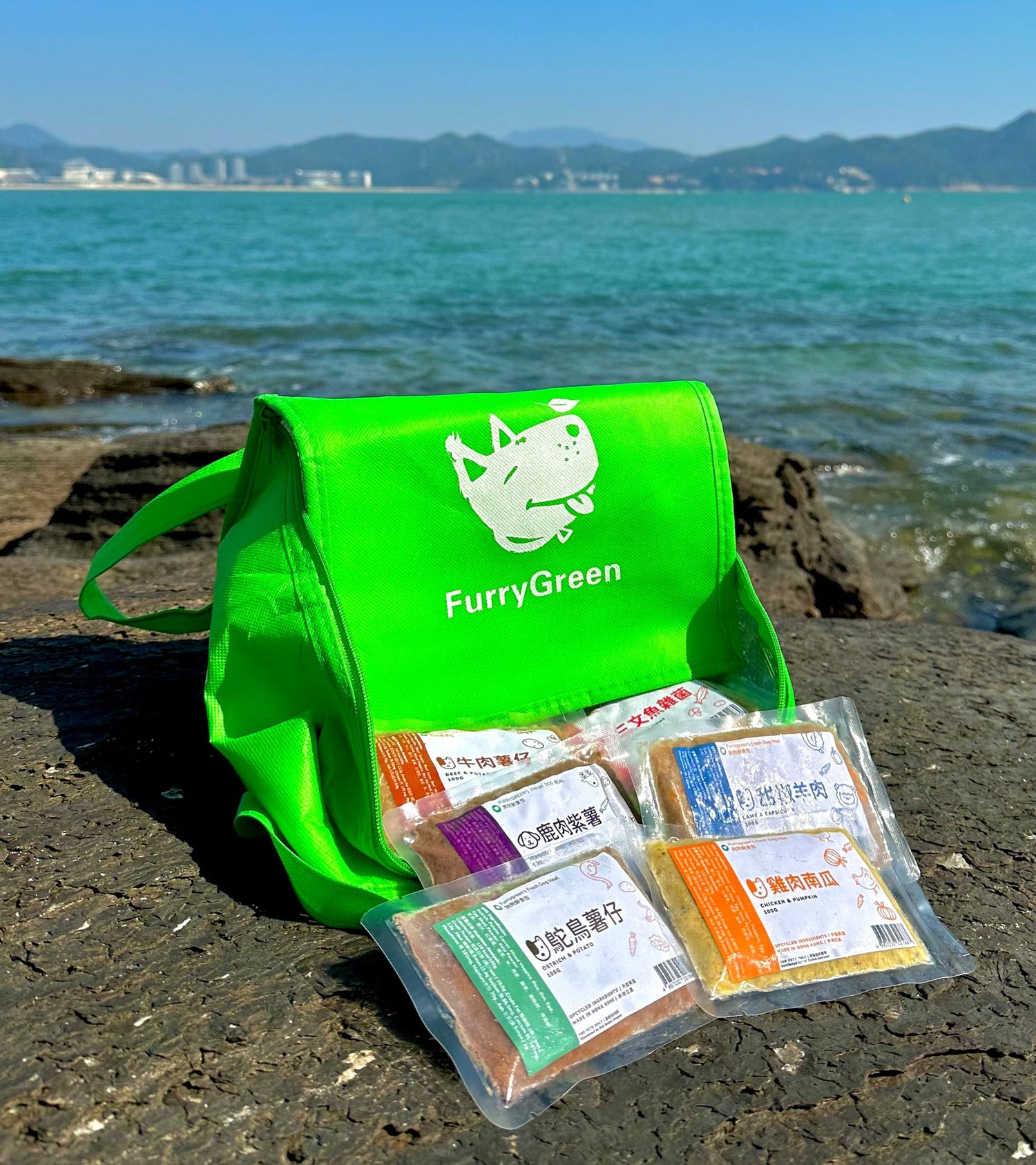
Furry Green's gently cooked meals are pre-portioned and made with visible whole ingredients — perfect for keeping chilled and serving once your dog has cooled down after a journey.
Keep Your Dog Restrained and Hydrated

A loose dog in a car is unsafe. Sudden braking can throw them forward, and they can distract the driver.
Use one of these:
- Crash-tested dog seatbelt harness
- Secured travel crate
- Vehicle barrier for larger dogs
Water is just as important. Pack fresh drinking water and a collapsible bowl. Offer small drinks during breaks, especially before hikes, beach visits, or outdoor dining.
My colleague's French Bulldog had this exact issue after a weekend drive toward Sai Kung. The dog was restrained and the air-con was on, but traffic stretched the trip. Extra water and a cooling stop made a real difference.
Read about : Why Water is Essential for Your Dog's Health
Never Leave Your Dog Alone in the Car

Never leave your dog alone in a parked vehicle. Not for coffee. Not for takeaway. Not for "just five minutes."
Shade is not enough. Cracked windows are not enough.
Dogs Trust highlights training, behaviour, and welfare support for owners, while the RSPCA includes seasonal advice on keeping animals safe in hot weather. The principle is simple: if you leave the car, your dog leaves with you.
Signs of heatstroke in dogs
Watch for any of these warning signs:
If you suspect heatstroke, move your dog to a cooler area, offer small amounts of water if they are conscious, and contact a vet immediately.
Plan Around Heat, Humidity, and Traffic

Travel early in the morning or after sunset. Avoid peak afternoon heat, especially when the Hong Kong Observatory issues Very Hot Weather Warnings.
Plan for tunnel queues, roadworks, and weekend traffic. A 20-minute journey can become 45 minutes.
High-risk dogs need stricter planning:
Flat-Faced Breeds
- French Bulldogs
- Pugs
- Bulldogs
- Shih Tzus
Other Dogs at Higher Risk
- Puppies
- Senior dogs
- Overweight dogs
- Dogs with heart or breathing problems
For longer outings, pack meals and water separately. Furry Green meals can be useful for staycations or post-hike feeding because they're pre-portioned and made with visible whole ingredients. Keep them chilled and serve only when your dog has cooled down.
Learn about Heatstroke in Dogs

Summer Safety Beyond the Car
Car safety doesn't end when you arrive.
Check the pavement with your hand. If it feels too hot for your palm, it's too hot for paws. Choose shade, grass, or indoor pet-friendly spaces.
At beaches or trails, give water breaks every 15–20 minutes. Watch breathing, energy level, and gum colour. Stop early if your dog looks uncomfortable.
For cats, use the same rules. Keep them in a secure, ventilated carrier. Cool the car first. Never leave them unattended.
Frequently Asked Questions
How hot is too hot to leave a dog in the car?
Any warm day can be too hot if the car is parked. Inside temperatures can rise quickly, even in shade or with windows slightly open. The safest rule is simple: never leave your dog unattended in a parked car during hot or humid weather.
Can I crack the windows and leave my dog for a few minutes?
No. Cracking the windows does not provide reliable cooling. Dogs can overheat rapidly because they depend mostly on panting to regulate body temperature. If you need to leave the car, take your dog with you or leave them safely at home.
What are the first signs of heatstroke in dogs?
Early signs include heavy panting, drooling, restlessness, bright red gums, and weakness. More serious signs include vomiting, confusion, collapse, or seizures. Heatstroke is an emergency — contact a vet immediately if you suspect it.
Are French Bulldogs and Pugs more at risk in summer?
Yes. Flat-faced breeds have shorter airways, which makes cooling through panting less efficient. French Bulldogs, Pugs, Bulldogs, and Shih Tzus need extra care in hot, humid weather. Avoid midday travel and keep outings short.
Should I feed my dog before a summer car trip?
Avoid a large meal right before travel, especially if your dog gets carsick. Offer water instead, then feed after arrival once your dog has cooled down. For longer trips, pack food chilled and serve it only in a cool, shaded place.
References
- American Veterinary Medical Association (AVMA). Hot Cars and Dogs: Protecting Your Pet from Heatstroke. Available at: https://www.avma.org
- Royal Society for the Prevention of Cruelty to Animals (RSPCA). Keeping Pets Safe in Hot Weather. Available at: https://www.rspca.org.uk
- The Kennel Club. Heatstroke in Dogs: Prevention and Recognition. Available at: https://www.thekennelclub.org.uk
- Hong Kong Observatory (HKO). Very Hot Weather Warning and Heat Information. Available at: https://www.hko.gov.hk
- World Small Animal Veterinary Association (WSAVA). Guidance on Heat-Related Illness in Companion Animals. Available at: https://wsava.org
- Hall EJ, Carter AJ, O'Neill DG. Incidence and risk factors for heat-related illness in UK dogs under primary veterinary care. Scientific Reports. 2020;10:9128. doi:10.1038/s41598-020-66015-8.
- Dogs Trust. Summer Safety Advice for Dog Owners. Available at: https://www.dogstrust.org.uk
Disclaimer: This content is for educational purposes only and does not replace veterinary advice. Always consult a veterinarian when making dietary changes for your pet.