
Dog Socialization in Busy Cities: A Pet Parent’s Guide
Dog socialization in busy cities means helping your dog feel safe around crowds, traffic, lifts, cafés, people, and other dogs. The best approach is slow, positive exposure — not forcing your dog to "make friends."
- Socialization is about confidence, not making your dog play with every dog they meet.
- Start small and reward calm behaviour with treats, praise, toys, or play.
- Busy places can overwhelm dogs, so watch body language and give them space early.
What Dog Socialization Really Means

Dog socialization is not just dog-to-dog play.
It means helping your dog feel calm and safe in daily life. In a dense city, that might include:
- Apartment lifts
- Busy pavements
- Buses, taxis, and motorbikes
- Children running nearby
- Outdoor cafés
- Vet clinics
- Other dogs on leash
- Helpers, delivery workers, and visitors
A well-socialized dog does not need to love everyone. They simply need to cope well.
If your dog can walk past another dog without lunging, relax under a café table, or recover quickly after a loud bus passes, that is successful socialization.
AVSAB's puppy socialization guidance supports early, positive exposure during puppyhood. Their humane training statement also recommends reward-based methods for dog training and behaviour support.
The Best Time to Start Socializing a Puppy
Puppies learn fastest between 3 and 16 weeks old.
During this period, their brains are especially open to new experiences. Positive exposure now can reduce fear and anxiety later.
That does not mean throwing your puppy into every busy place. It means safe, gentle exposure. For example:
- Carry your puppy near a quiet street.
- Let them watch people from your arms.
- Invite calm friends to visit.
- Play traffic sounds softly at home.
- Visit your vet for a treat-only "hello" visit.
Ask your veterinarian how to balance socialization with vaccination safety. In many cases, puppies can safely experience the world before full vaccination if you avoid high-risk areas.
A Frenchie owner in Sai Ying Pun recently told me her puppy barked at every trolley and bus. We started with five-minute "watch and treat" sessions from a quiet corner. Within two weeks, the puppy could sit calmly while minibuses passed. Small wins count.
How to Socialize Your Dog Without Overwhelming Them
The biggest mistake is doing too much, too fast.
A crowded dog park may feel fun to you. To a nervous dog, it can feel like being pushed into a packed MTR carriage during rush hour.
Start at a distance where your dog can still eat treats and respond to you. If they stop taking food, freeze, bark, or pull away, you are too close.
Easy City Socialization Plan
| Situation | Start Here | Build Up To |
|---|---|---|
| Traffic noise | Watch from a quiet bench | Walk beside a busier road |
| Other dogs | Observe from across the park | Walk past calmly on leash |
| Cafés | Sit outside for 5 minutes | Relax under the table |
| Lifts | Enter when empty | Ride with one calm neighbour |
| Vet visits | Treat-only lobby visit | Calm exam room handling |
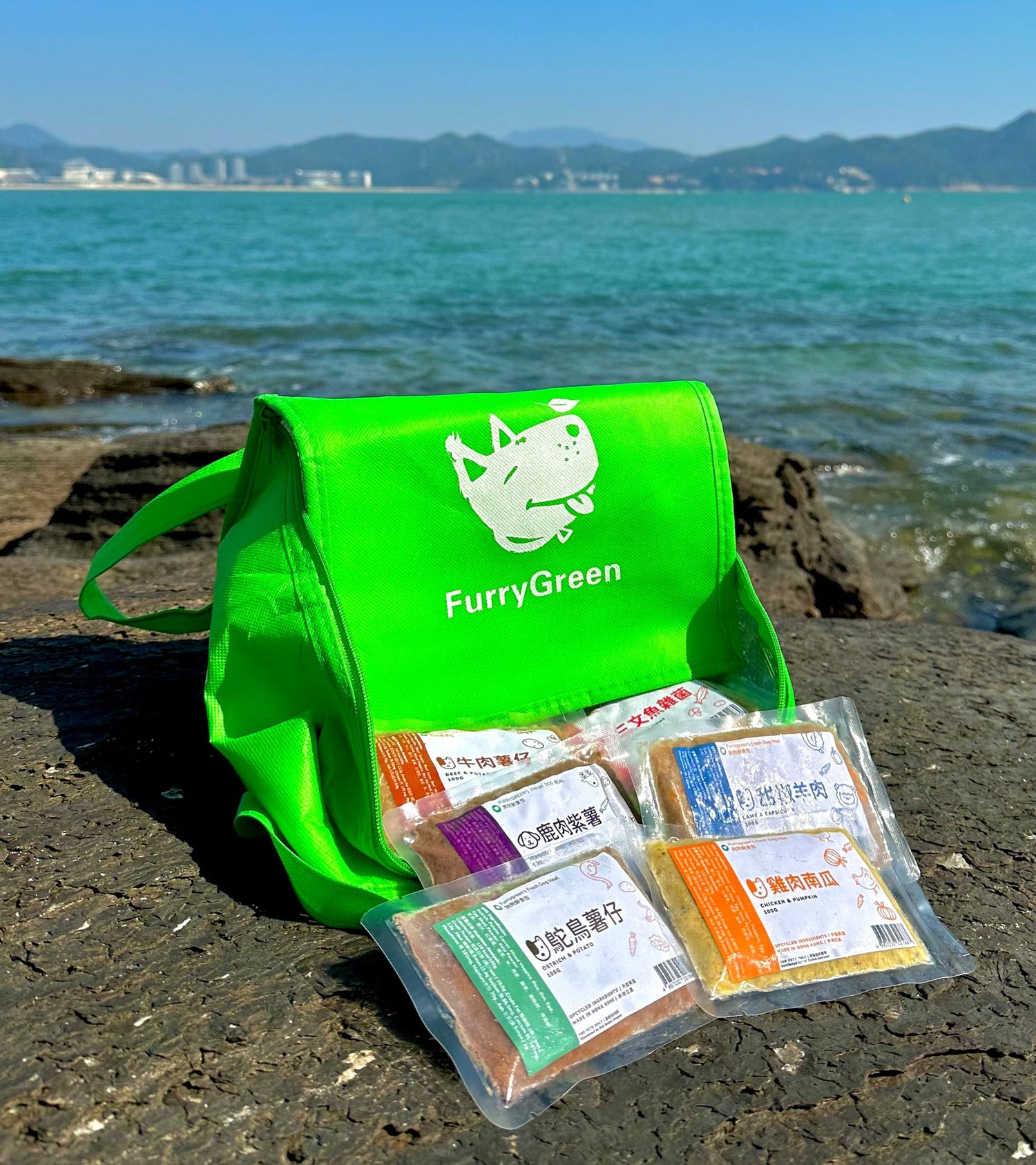
Use high-value rewards. Soft treats, praise, toys, or a small amount of your dog's regular fresh food can help build good associations. For dogs already eating Furry Green, a few tiny pieces from their meal can work well for low-distraction practice at home or in the lobby.
Keep sessions short. Five calm minutes are better than 30 stressful ones.
Make Every Training Reward Count
Use small pieces of gently-cooked Furry Green meals as high-value rewards your dog already loves.
Explore Furry Green MealsLearn Your Dog's Body Language
Dogs usually show stress before they bark, growl, or snap. Watch for:
- Lip licking
- Yawning when not tired
- Turning the head away
- Tucked tail
- Flattened ears
- Panting when not hot
- Hiding behind you
- Refusing treats
- Stiff body posture
If you see these signs, move away. Do not scold your dog for being scared. That only adds pressure.
Instead, create distance and reward them when they relax. This teaches your dog that they can trust you to help.
My colleague's rescue dog had this exact issue with apartment lifts. She stopped forcing him in when neighbours were inside. For two weeks, they practised entering empty lifts, eating a treat, and stepping out. Now he rides calmly unless the lift is packed — and that is okay.
Dog Parks, Cafés, and Playdates: What Works Best?

Not every social setting suits every dog. Some dogs love group play. Others prefer one quiet walking buddy. Both are normal.
Dog Parks
Dog parks can help confident, friendly dogs burn energy. But they are not ideal for shy, reactive, or easily overwhelmed dogs.
Before entering:
- Walk around the outside first.
- Watch the dogs already inside.
- Avoid parks with rough chasing or bullying.
- Leave if your dog hides, freezes, or snaps.
Your dog does not need the dog park to be socialized.
Pet-Friendly Cafés
Cafés are better for teaching calm behaviour. Before you go:
- Exercise your dog first.
- Bring water.
- Pack small treats.
- Bring a chew or lick mat.
- Choose a quiet table at the edge.
Reward your dog for lying down, checking in with you, and ignoring distractions.
If your dog eats gently-cooked meals, keep training portions small and count them as part of the day's food. Furry Green meals are portioned for daily feeding, so use training rewards thoughtfully.
Small Playdates
For many city dogs, one-on-one playdates are better than crowded parks.
Choose a dog with a similar size, play style, and energy level. Start with a parallel walk before letting them interact.
Parallel walking means two dogs walk in the same direction with space between them. It reduces pressure and helps them settle.
What Good Socialization Looks Like

Good socialization does not mean your dog becomes the friendliest dog in town. It means your dog can:
- Walk calmly past people and dogs
- Recover after sudden noises
- Stay relaxed in a lift
- Visit the vet with less panic
- Settle at a café
- Ignore dogs they do not want to meet
Confidence matters more than contact. If your dog is calm, curious, and able to disengage, you are on the right track.
Food That Supports a Confident, Happy Dog
Real ingredients, portioned for your dog's daily needs — a foundation for better health and calmer behaviour.
Discover Furry Green Dog FoodFrequently Asked Questions
How do I socialize my dog in a busy city?
Start with quiet places and short sessions. Let your dog watch people, traffic, and other dogs from a distance where they still feel safe. Reward calm behaviour with treats, praise, or play. Slowly increase difficulty only when your dog stays relaxed.
Is it too late to socialize an adult dog?
No, but adult dogs may need more time. Focus on confidence, not forced interaction. Use gradual exposure, reward-based training, and safe distance. If your dog barks, lunges, or shuts down often, work with a qualified positive reinforcement trainer or veterinary behaviour professional.
Should I let my dog greet every dog?
No. On-leash greetings can be stressful because dogs cannot move freely. Many dogs prefer space. It is better to teach your dog to walk past other dogs calmly than to expect them to greet everyone.
Are dog parks good for socialization?
Dog parks can suit confident, socially skilled dogs. They can overwhelm shy, young, or reactive dogs. Watch the dogs inside before entering. If play looks rough or your dog seems tense, skip it and try a quiet walk instead.
What if my dog is scared of traffic?
Start far from the road. Reward your dog for noticing traffic without reacting. Keep sessions short and move closer only when they stay relaxed. If your dog refuses treats, shakes, or tries to escape, increase distance and try again another day.
- American Veterinary Society of Animal Behavior (AVSAB). Position Statement on Puppy Socialization. avsab.org
- American College of Veterinary Behaviorists (ACVB). dacvb.org
- Overall KL. Manual of Clinical Behavioral Medicine for Dogs and Cats. Elsevier.
- Horwitz DF, Mills DS (Eds.). BSAVA Manual of Canine and Feline Behavioural Medicine.
- Landsberg GM, Hunthausen WL, Ackerman LJ. Behavior Problems of the Dog and Cat.
- Scott JP, Fuller JL. Genetics and the Social Behavior of the Dog. University of Chicago Press.
- World Small Animal Veterinary Association (WSAVA). Animal Welfare Guidelines. wsava.org
Disclaimer: This content is for educational purposes only and does not replace veterinary advice. Always consult a veterinarian when making dietary changes for your pet.